
Wednesday, March 26, 2014
The Essence of Life
I just happened across the essence of life. I wasn’t really looking for it but it found me. I was on the first leg of my usual round trip shuttle junket to work, minding my own business, reading a tiny book entitled, “Lying”, by an avowed atheist, Sam Harris. Harris seems to be on a quest to show that humanity can hold a sense of ethics and values and morals without the guidance of a religiously set gyroscope. I’ve always felt that way. In fact, it always seemed to me that religion gave people a free pass to misbehave in the most violent and despicable ways. In reading this book, dealing with truth telling, honesty and integrity, the triumvirate of goodness, my headspace was available to pull out from the tangle of intellectual musings, an epiphany.
I love epiphanies because they are so spontaneous and travel in and out of one’s brain like some runaway train. But this train wasn’t just filled with the freight of my usual noodlings with no real destination. This one had application and was headed somewhere in my brain. Before exiting it left me with this: To live a fulfilling and worthwhile life there are two elements necessary and they work together as partners; we must learn all we can and with that knowledge we must make the world a better and more beautiful place. That’s it. Simple really.
What constitutes learning is everything we bump into as we stray through life: school, friends, relatives, marriage, child bearing, guitar playing, book reading, sailing, science, Darwin, Beethoven, spelunking, beekeeping, job, career, beer drinking, homelessness, butterflies… It’s all out there and we breathe it all in and learn about ourselves, those around us, what constitutes love, how to share, how to care about things outside of ourselves, how to observe, how to think and problem solve, how to be impeccable and question authority and get along and be a good citizen and discover. What we do with all of this knowledge makes all the difference. The point of this exercise of learning as we are being is to gift it to the world. It doesn’t belong to us, not to covet nor hoard. Our unique intellects, shaped by our unique learning experiences need to be released into the world to make it a more beautiful and lasting place.
It’s that simple. To do less is to simply take up breathing space. Paradise by M.C. Escher

Thursday, March 13, 2014
What Would John Muir Do?
I get it. I will have very little impact on this big, all-encompassing world, the one I fret about so. But, then there's my world, the world of getting up and getting ready for work, stopping by Peet's for a tea and discussing conspiracy theories with Daniel, hopping on the shuttle, walking from Gilman and Myers to my office, popping my head through all thresholds with an a.m. "hello, I'm here", firing up my computer, waiting for it to bring me the start of my work day via unfettered email flow. I can do things in this world of mine, this closed eco and ego sytem that I reverberate through like some low-intensity electrical charge. This is why the planned conversion of Muir Field from a grass field to a synthetic turf field is such a sticking point for me. Out there in the big bad world, decisions that reflect industry greed and laziness are so deep and wide that I know I'm not even six degrees of separation from having a seat at the trough. But, here in my own backyard is a different story. Sort of. A local action, some local screaming to local ears could make a difference. At least a path is visible. A compelling argument might resonate, some grains of truth might raise an eyebrow or two, or more; perhaps enough to jettison the idea of a synthetic turf field altogether.
So, why all the fuss about this field? Here's how I see it. There is an athletic field made of real grass that resides in a central spot on campus and doubles as a campus park. The field's perimeter is marked by stately eucalyptus trees and is adjacent to an indoor pool and outdoor tennis, basketball and sand volleyball courts. When not in use by organized athletic teams this pristine space is used by university citizens as a pass through while walking to bus stops, housing, the beach, parking and also affords campus workers and dwellers a little open space to walk dogs, throw a frisbee, eat lunch, play croquet, take a nap, conduct children's fun and games. The field is known as Muir Field, part of the Muir campus whose namesake, John Muir, is honored as one of this country's earliest environmental pioneers. Because the powers that be wish to turn this field into a 24/7 workhorse that can accommodate constant on-campus use and off-campus rentals for some quick cash, its natural grass days are numbered. Instead, this living and breathing organism that plays host to worms, bugs, birds, dandelions, us and CO2 sequestration will be replaced by a bed of 40,000 crushed tires, a.k.a. tire crumb, topped by blades of plastic grass fashioned to look like the real thing. But, it's not the real thing. It is one hot mess. The plastic blades don't breathe the way grass does and in the summer under a searing San Diego sun temperatures can climb upwards of 120 to 130 degrees. Not exactly conducive to playing ball or picnicking. The tire rubber, used to simulate the dirt and claimed to be "safer" by industry proponents, due to the sponginess of the rubber bed, is a pile of toxic dust that contains carbon black, found to be a cancer causing agent. Although the synthetic turf industry would have us believe that theirs is a "green" and eco-friendly industry that saves our landfills and conserves water, their half-truths or outright lies are as thick as the tire debris they are tracking across the playgrounds of America.
So, back to my world. Is anyone listening? Does anyone care that their kids will be running and jumping on a bed of toxic chemicals? Does anyone know? The answer is a resounding "NO". At least not yet. Shall I continue my opposition openly? Or strike out subversively? What would John Muir do?


Sunday, March 2, 2014
Dinosaur on Dinosaurs
I've been working on a poem entitled, "Dinosaur", which I'm trying to cleverly craft into a statement about aging but found myself drifting along on a tangent examining the latest chapter of scientific skullduggery referred to as "revive and restore". So, the original idea of Dinosaur, being the act of pushing away older people before they somehow infect the culture with slow and outmoded systems and ideas, let's call it Dinosauration, morphed suddenly into an interest in examining the ethics and morality of bringing back extinct species. Rife with controversy yet so out-of-this-world fascinating in an almost Jules Verne sense, I argued in its favor recently, in theory, with a young friend who is an avowed environmentalist. When I asked what her thoughts were concerning revival of the woolly mammoth, which I only used as an example because I love saying "woolly mammoth" and had just seen a picture of one with its enormous curved tusks, she responded negatively, immediately citing the well-used "playing God" as an example of the conceit of such an endeavor. Now, she is an atheist, as am I, and immediately took back the idea of "playing God" since any red-blooded atheist would see the folly of using that phrase. However, the tinkering with the natural order of things was the real issue here and she felt that the scientific community's efforts, energies and monies would be better spent trying to save the species not yet extinct; the critters that are still just barely wining and dining, and choking and grasping and tenuously existing in a world they can still call their own. Which begs the question, what is the purpose of science and what should it pursue? Should it only "fix" things in this world with a myopic gaze on practical solutions for self-created problems or might that carefully adjusted focus limit the depth of sight and narrow all peripheral possibilities? In other words, if we shield our gaze from the stars and sun and moon, looking only at Mother Earth, is it possible we could become burrowers, digging in and unable to see the light outside of our tunnels? I'm not sure what motivation should power scientific inquiry but I feel certain that if a real Jurassic-like park appears in the outlands of Siberia containing a cast of characters from the Pleistocene Age, including the Woolly Mammoth, the motivation will be money. There's no money in gnat catchers. Said by a true dinosaur.


Friday, February 28, 2014
Impact
I am fitted with disaster. It shapes every curve, every cell of the brain, contours of my body, gait of each step. Clip, clop, I trod through it each day winding my way through short spits of headlines that gut punch and tighten the chest just enough to lead me to the baby aspirin bottle, just in case. I am at once a polar bear, clawing at a piece of ice no longer able to bear my weight; I am a butterfly searching for the milkweed no longer there; I am a wolf witnessing the massacre of my pups; the rivers, the ocean, the glaciers, the reefs, the critters, the everything touches me and I feel it, deeply. If my head could explode it would. Another run to the pantry for ibuprofen. I am spent, both witness and participant to a self-serving, grab and go civilization, nonsensically cock-eyed and lurching toward burn-out. My RSS feed keeps me abreast of every new ecological disaster or heartbreaking tragedy involving beaks and fur and horns and antlers and stripes and shells and wings and fins and the mommies and the babies, oh how the mommies and the babies can cut clean through to the amygdala. And the drip, drip, drip of the oil and the 350 parts per million and the Keystone, the pipelines, the pipedreams, the pied piper of planetary madness, the corporation suckling its stock holders on a tasteless teet.
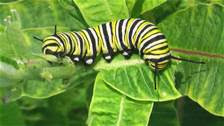
It's all so disappointing. If I had a tail I would be chasing it around and around trying to find a grip, a steady state. No tail, no grip, no steady state, no steady gait. So, I plant milkweed and fuss over Monarch caterpillars. That's the only kind of impact I have. A few caterpillars, a few butterflies, a few more eggs laid, many more caterpillars, many more butterflies, many more eggs. It's not enough, but it's something. I'm sorry I can't do more. But, it's something, some kind of impact.


Thursday, July 4, 2013
Let Freedom Ring
In the dawn's early light I got to thinking about being British. It was 6:30 a.m. on July 4th. and I was awakened not by the rockets' red glare but by the continual cawing of canyon crows, which kept me from falling back asleep on this day of celebrating our independence from mother England. Back in the day, say 300 years ago, a group of crazy religious fanatics who wanted England's brand of Protestantism to reflect their own narrow, sectarian views, left for the British colonies, a land already stolen from an indigenous people and in the throes of continual plundering mode by the English throne, in order to establish their own community of religious intolerance, a tradition which continues today with our Christian right. Cotton Mather and his merry gang of Puritan pranksters scared the bejesus out of their churchgoing constituents, framing much of daily life around a continual need of proving one's righteousness to placate a truly pissed off God. What holy father wouldn't be angry, given such a gathering of wayward, sinful souls. If the Pilgrims had waited just a mere 20 years England's religious reformation might have embraced the grim and sober tenets of the Pilgrim's brand of Protestant craziness. But, drunk on the notion that they must practice their own bigoted, racist and narrow-minded faith without the shackles of accepting other beliefs, off they went. Their adventure upon the high seas and subsequent landing in America is the stuff of which legends are made. Our quaint myth of the Pilgrims' landing and the breaking of bread and sharing of fowl with the friendly heathens rings true to school children marching in Thanksgiving Day parades but has little real historical traction, although the slaughtering of nearly 45 million turkeys for our annual Thanksgiving celebration makes one wonder if more than just the children are gullible.
Life in the colonies under the rule of King George III of Great Britain couldn't have been much different than life in England under the same rule of law. But, oh dear, the taxes. That onerous tax on tea was the final straw. Thank goodness our own Tea Party today in America is ever vigilant on the tax front.
So, just where am I going with this? Well, I'm not sure what I'm celebrating on 4th of July. A land grab from the Indians? Englanders that turned on their own country? Religious zealots that formed their own more perfect union? Had we done nothing and simply been law-abiding English folk residing in the colonies we would be English today and instead of launching fireworks and imbibing in potato salad we would be celebrating the Wimbledon semi-final victory of fellow countryman Andy Murray while downing some fish and chips and a not-so-cold beer. Would that be so bad?
Sunday, March 4, 2012
The Walk Home

Funny things can happen when I walk home from the shuttle
through the heart of Hillcrest, especially when the darkness
starts crawling in and filling in the lingering shadows and
the neon starts washing the sidewalks with its strange and
eerie light. This particular Wednesday was no exception.
I expected there to be something interesting coming my
way and I wasn't disappointed. At the corner of University
and 6th. Avenue, outside of City Deli a woman asked me
if I could spare some change for the bus. This wasn't an
unusual request as the avenue is loaded with sad people
in various stages of their demise, some pushing what's
left of their worldly goods around in shopping carts, others
just wandering aimlessly, if they're even able to wander. This
woman seemed somewhat together in that her clothes
seemed fresh and clean, she was walking erect and
carrying a satchel, not unlike my book bag I was carrying
but she did have a somewhat dazed look that is hard to
describe. She looked a little crazy. So, when she asked
me for change for the bus we were both waiting at the
light and I couldn't escape. It was awkward. So, I fished
a dollar bill out of my jean pocket and handed it to her.
She looked startled and said, "That's a lot of money, are
you doing OK." I wasn't sure what she meant, could I
afford that dollar, or was I crazier than she? I nodded
and told her I was doing fine. Then she asked me why
I gave her a dollar bill. "Because you need to take the
bus and this dollar bill might give you bus fare," I
replied. She gave me a funny look and said, "But what
if I'm lying about the bus." What an odd thing to say,
I thought. "Well, I guess you'll have to live with that,"
I told her. "I'm taking you at your word." And with those
parting remarks I crossed the street and continued my
walk home down University Avenue. I never looked
back to see if she even crossed the street and I don't
know if she took the bus. I only know that I wanted
to believe her.
Saturday, February 18, 2012
The Fourth Reich?


Hidden in plain sight
The Reich of misplaced dreaming
Broke nazi hipsters
Heading out from Will Rogers State Park, just a sneeze away from the heart of chi chi Brentwood, off of Sunset Boulevard and a half mile up, hikers have before them a matrix of trails, crosscrossing through the Santa Monica mountains, that could keep even the most ambitious trekker busy for days. If you find the right trail that heads toward the top ridge of Topanga Canyon you can see the layout of Los Angeles bow before you; the gentle curve of coastline that sweeps from Santa Monica to the jutting jawline of Palos Verdes and the cluster of urban behemoths that comprise downtown Los Angeles. All the while the birds are singing, the squirrels are scampering, the oak trees are flexing and the hillsides are lush with the native California palette; sages, lemonberry, acacia, manzanita. Since the signage amongst the sage is
casually and sparsely placed, it’s easy to get lost. We did. Our party of five slipped and slid down recently cut rivulets into a stream fed canyon known as Rustic Canyon. There, not really hidden but clearly off the beaten path is an abandoned enclave of long lost dreams of a future Utopia for American National Socialists waiting for their Fuhrer to set them free. Yep, I’m talking Nazis, our own homegrown kind, huddled in a canopied, self-contained community to wait out World War II and pounce on the American mainstream to impose order Nazi style. While the full story behind this boondoggle is a bit sketchy the following is known: In 1933, 50 or so acres of canyon property were purchased from Will Rogers by Winona and Norman Stephens using the front name of “Murphy”. Norman was a wealthy silver miner from Colorado and his wife, Winona was the daughter of a wealthy industrialist and a bit of a kook, believing in the world of metaphysical phenomena. She became acquainted with a German, Herr Schmidt, who claiming to have supernatural powers, apparently imposed them on our gullible Winona and Svengalied her into believing that with Europe collapsing and Germany’s inevitable victory in its march toward world domination, there would be a period of anarchy across our great country. This made sense to Winona and Norman, who spent upwards of $4 million to build a small community for Nazi sympathizers to safely wait out the impending societal breakdown. Prior to running out of money, the Stephens built an impressive infrastructure: terracing hillsides for agriculture, laying out sprinkler systems for orchards, a 500-gallon water tank, power station with double generators, stables, a two-story steel-framed garage and machine shop…Before the actual living quarters were built the Japanese bombed Pearl Harbor, Herr Schmidt’s sorry ass was arrested and the future home and plans of the Stephens were dashed and abandoned. The 1978 Mandeville Canyon Fire destroyed the abandoned work of the Stephens and what now remains is the burnt out hulk of the machine shop, the generator station completely awash in graffiti and suffocating through overgrown vines, numerous concrete staircases that lead up to overgrown terraced hillsides and what would have been a sustainable garden, and a virtual jungle gym of rusted steel pipes, rebar, bathtubs, window frames, even an old bike hangs garroted in the miasma. The property now belongs to the Santa Monica Parks and Recreation Department which plans on razing what’s left of the compound and replacing it with a benign picnic area. But for now, this fascinating peek into a bygone era and wonderland of eye candy for photo buffs is ripe for the taking. And there’s a more direct way of finding Murphy Camp. Just head upstream from Will’s polo fields.
Subscribe to:
Posts (Atom)